September 18, 2026
The History of Hawaiian Art: From Ancient Hawaiʻi to Modern Island Creativity
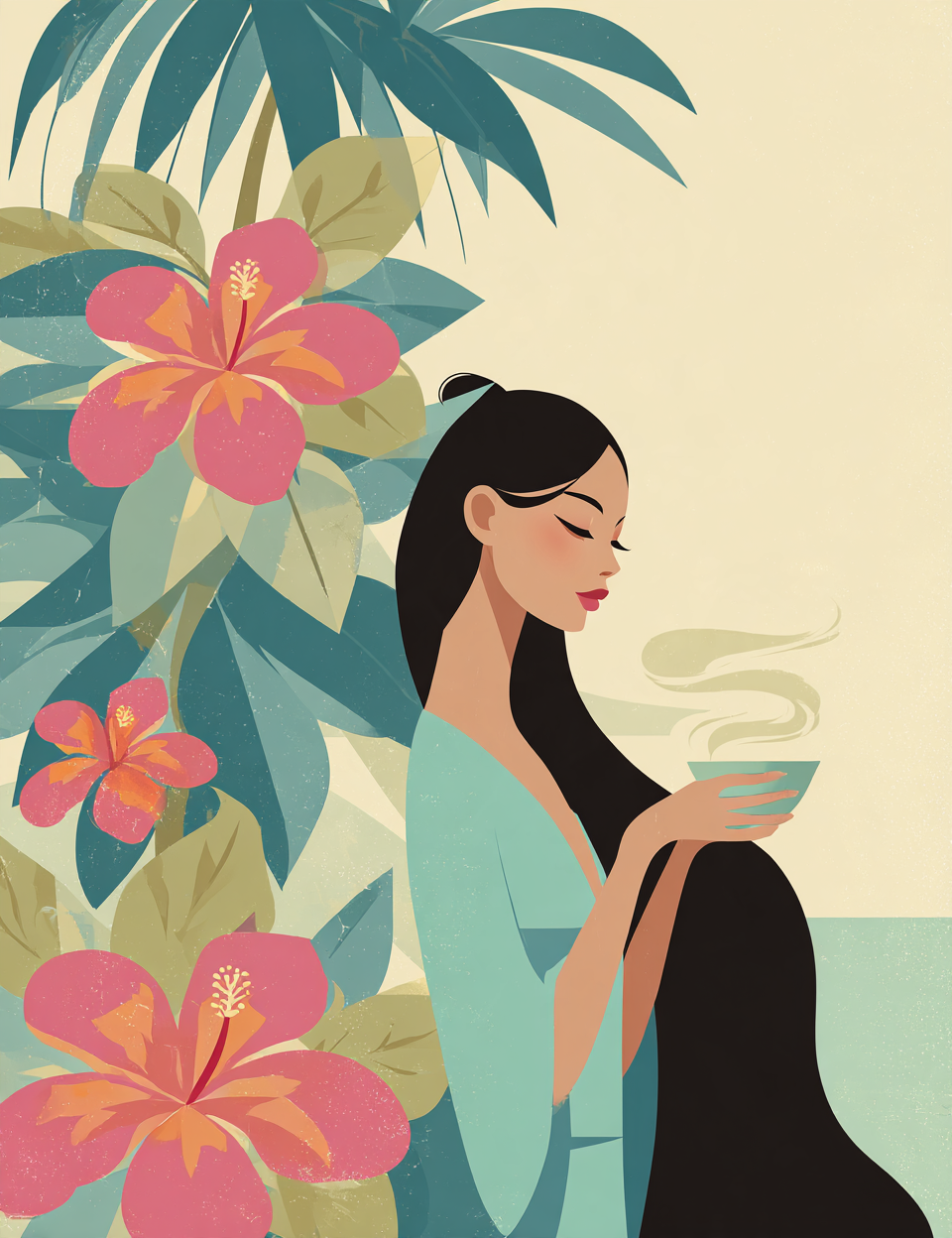
Before there were galleries in Hawaiʻi, before there were art prints, cameras, canvases or modern studios, the people of Hawaiʻi were already creating art.
They carved.
They wove.
They painted.
They shaped.
They decorated.
They designed.
And they passed stories from one generation to another.
The history of Hawaiian art is therefore much more than a history of paintings. It is a story of a culture expressing its relationship with the land, the ocean, spirituality, family, community and the natural world.
Today, artists continue that creative tradition in entirely new ways.
Before Canvas: The Art of Ancient Hawaiʻi
Long before European contact, Native Hawaiians developed sophisticated artistic traditions using the materials available on the islands.
Wood, stone, shell, bone, feathers, kapa and plant fibers could all become part of an artist’s work.
Kapa — cloth made from the fibers of certain trees — was decorated with patterns and designs created using natural dyes and traditional tools. These textiles were practical, beautiful and culturally meaningful.
Featherwork was another extraordinary Hawaiian art form.
Highly skilled craftspeople created spectacular feather objects, including cloaks and helmets associated with Hawaiian chiefs. Brightly colored feathers were carefully collected and assembled into intricate designs.
These weren’t simply decorative objects.
They could communicate status, identity and cultural importance.
Art Was Part of Everyday Life
One fascinating thing about traditional Hawaiian art is that it wasn’t separated neatly into categories such as “fine art,” “craft” and “design.”
Art could be woven into everyday life.
A canoe could be carefully shaped and decorated.
A kapa cloth could contain beautiful patterns.
A lei could transform flowers, leaves, shells or feathers into something deeply expressive.
A carved object could serve both a practical and ceremonial purpose.
Visual design was part of the culture itself.
Patterns, materials and forms could carry meaning, connect people with their environment and reflect generations of knowledge.
Petroglyphs: Images Written Into the Landscape
Across the Hawaiian Islands are thousands of petroglyphs, known as kiʻi pōhaku.
These rock carvings provide another window into Hawaiʻi’s distant past.
Human figures, animals, symbols and other forms were carved into lava rock in locations throughout the islands.
Their precise meanings are not always known today, and interpretations can vary. But they demonstrate something important: people in ancient Hawaiʻi were creating visual records in the landscape long before written descriptions of the islands existed.
The rock itself became the canvas.
The Arrival of Western Artists
A major change came in 1778, when Captain James Cook and his crew arrived in the Hawaiian Islands.
European visitors began recording the people, landscapes, plants and customs they encountered.
Artists accompanied some of these voyages, producing drawings, paintings and illustrations of Hawaiʻi.
Suddenly, Hawaiian landscapes were being represented through a European artistic tradition as well as through the visual traditions that already existed within Hawaiian culture.
This period created an important — and complicated — meeting of artistic worlds.
The Hawaiian Kingdom and a New Artistic Era
During the 19th century, Hawaiʻi developed increasingly strong connections with the wider world.
The Hawaiian Kingdom became a constitutional monarchy, Honolulu grew as an international port, and visitors, merchants, diplomats and artists arrived from overseas.
Painting became an increasingly visible artistic medium.
Artists began creating portraits, landscapes and historical scenes depicting Hawaiʻi.
One of the most important early artists associated with the Hawaiian Kingdom was David Howard Hitchcock, who became known for his paintings of Hawaiian landscapes and volcanic scenery.
Other artists documented the islands through paintings, drawings and illustrations, helping create a visual record of Hawaiʻi during a period of enormous change.
Photography Changes the Picture
Photography eventually transformed the way Hawaiʻi was seen and remembered.
Early photographers documented landscapes, people, architecture and important events throughout the islands.
Photography made it possible to reproduce images of Hawaiʻi on a much larger scale.
The islands could now be seen by people who had never visited.
This helped establish many of the visual images that people around the world came to associate with Hawaiʻi.
But photography also created something more personal.
It preserved memories.
A photograph of a family standing beside the ocean, a portrait taken in Honolulu, or an image of a Hawaiian landscape could become a treasured record of a particular moment.
Hawaiʻi Becomes an Artistic Inspiration
During the late 19th and early 20th centuries, artists continued arriving in Hawaiʻi from the mainland United States and elsewhere.
They were attracted by something almost impossible to ignore: the extraordinary light, landscape and cultural diversity of the islands.
Volcanoes.
Rain forests.
Beaches.
Mountains.
Tropical vegetation.
Traditional Hawaiian culture.
And an ocean stretching in every direction.
Hawaiʻi offered artists a visual vocabulary unlike almost anywhere else.
The Rise of the Hawaiian Modern Art Movement
During the 20th century, artists living and working in Hawaiʻi began developing approaches that moved beyond simply documenting tropical scenery.
The Honolulu Museum of Art — originally founded as the Honolulu Academy of Arts in 1927 — became an important institution for the arts in Hawaiʻi.
Artists began exploring modernism, abstraction, local identity and the unique mixture of cultures found throughout the islands.
The result was not simply “Hawaiian art” in the traditional sense.
It became something broader.
Art created in Hawaiʻi could draw from Hawaiian traditions while also incorporating Japanese, Chinese, Filipino, European, American and other influences that had become part of the islands’ multicultural society.
Hawaiian Art Finds a New Voice
As the 20th century continued, Hawaiian artists increasingly explored questions of identity, history, land and cultural heritage.
Artists such as Herb Kawainui Kāne played an important role in reconnecting contemporary audiences with aspects of traditional Hawaiian history and voyaging.
Artists associated with the Hawaiian Renaissance of the 1970s and beyond also helped renew interest in Hawaiian language, culture, music, history and traditional practices.
This cultural resurgence influenced the visual arts as well.
Hawaiian art was no longer simply something viewed through the eyes of visitors.
Hawaiian artists were increasingly telling their own stories.
Contemporary Hawaiian Art
Today, Hawaiian art is wonderfully diverse.
You’ll find painters working with traditional subjects.
Photographers creating contemporary interpretations of island life.
Artists exploring abstraction.
Printmakers using bold graphic language.
Sculptors working with wood, stone and modern materials.
Designers combining traditional Hawaiian motifs with contemporary aesthetics.
And artists experimenting with completely new forms.
Some artwork looks directly toward Hawaiian history.
Some looks toward the future.
Some does both.
That is what makes the contemporary Hawaiian art scene so exciting.
Hawaiʻi Is Still the Inspiration
Walk through the islands today and you’ll quickly understand why artists continue to be inspired here.
The landscape changes dramatically from one island to another.
The light changes by the hour.
Clouds move across mountains.
The ocean changes from deep blue to turquoise to silver.
Volcanic rock contrasts with brilliant tropical vegetation.
And everywhere, there are stories.
Hawaiian art continues to evolve because Hawaiʻi itself continues to inspire new ways of seeing.
Explore Hawaiian Art
The history of Hawaiian art is enormous, and we’ve only scratched the surface here.
From ancient kapa and featherwork to petroglyphs, kingdom-era paintings, photography, modernism and today’s contemporary artwork, Hawaiian creativity has never stood still.
If you’d like to explore the artwork inspired by these remarkable islands, visit our Hawaiian Art collection.
You’ll find artwork that celebrates Hawaiʻi through many different styles, perspectives and creative approaches.
The Story Behind Hawaiian Art
Behind every artwork is an artist.
Behind every artist is an idea.
And behind many ideas is a place.
Hawaiʻi has inspired generations of artists because it offers something much more profound than beautiful scenery. It offers history, culture, nature, movement, color and stories that continue to unfold.
To learn more about Hawaiian Art and the story behind our collection, visit our About page.
And if you’d like to ask us a question or learn more about a particular piece, we’d be delighted to hear from you through our Contact page.
A Living Art Tradition
Perhaps the most beautiful part of the history of Hawaiian art is that it isn’t finished.
It is still being written.
The artists of ancient Hawaiʻi could never have imagined digital photography, contemporary printmaking or modern galleries.
And today’s artists cannot know what forms Hawaiian art will take another hundred years from now.
But the creative impulse remains.
To observe.
To remember.
To celebrate.
To tell stories.
To honor a place.
And to turn an idea into something that can be shared with another person.
From a design carved into stone thousands of years ago to a contemporary Hawaiian painting hanging in a home today, there is a remarkable thread connecting the past with the present.
Hawaiian art is not simply art about Hawaiʻi.
It is part of the continuing story of Hawaiʻi.
🌺 Mahalo for exploring that story with us.