August 5, 2026
The Meaning Behind Hawaii's Most Popular Art Subjects
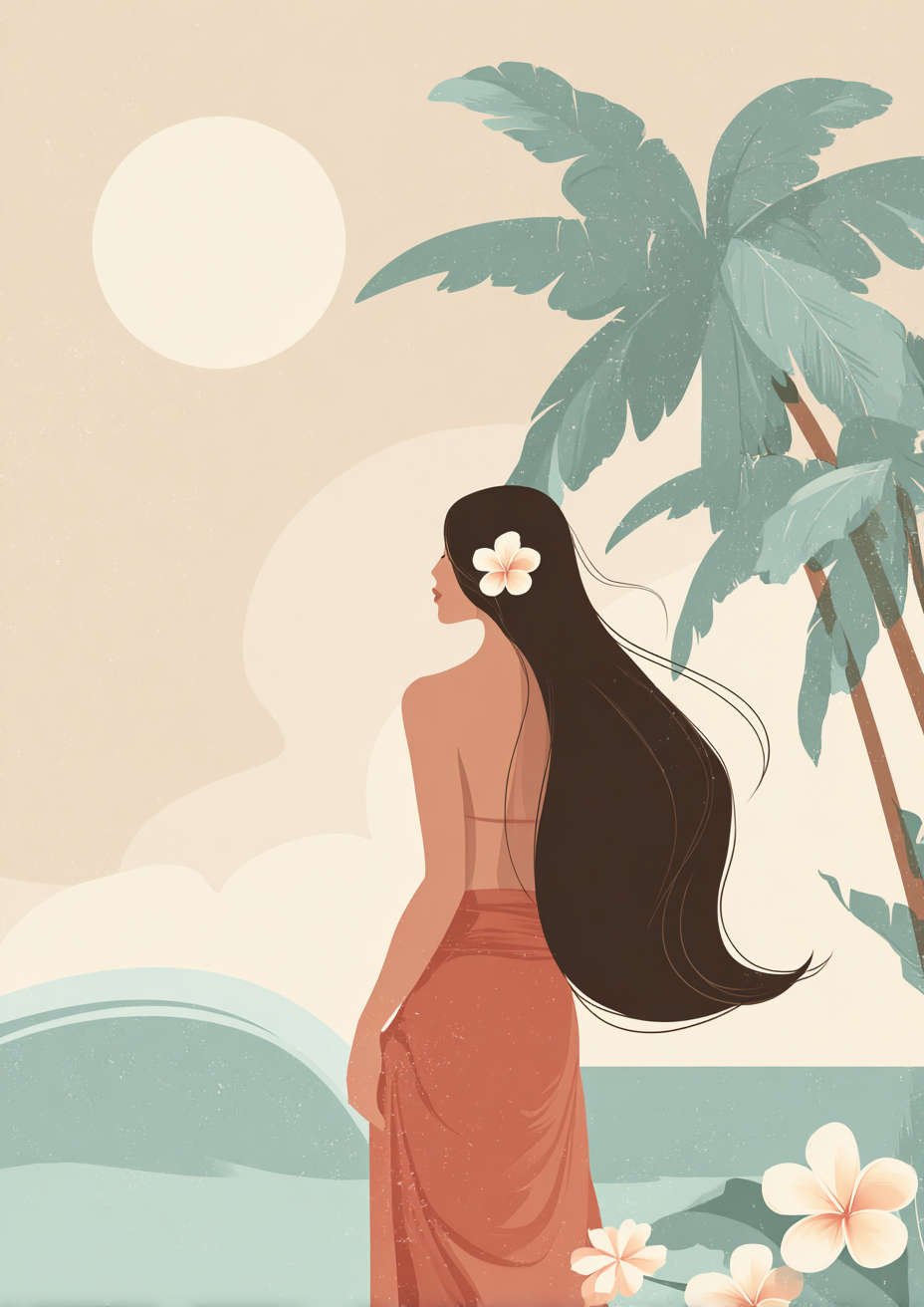
Walk into any gallery or gift shop in Hawaii and you'll notice the same handful of subjects appearing again and again — sunsets, ocean waves, palm trees, plumeria flowers. These aren't just popular because they're pretty. Each one carries its own meaning within island culture.
The Sunset: Endings, Gratitude & Aloha
In Hawaiian culture, sunset is often treated as a small daily ritual — a moment to pause and watch the day close. It's no accident that "sunset watching" is practically a tradition on every island. In art, a sunset represents more than a pretty color palette; it captures a feeling of gratitude and presence that visitors often say is one of the things they miss most after leaving the islands.
The Wave: Power, Change & Constant Motion
Waves show up constantly in Hawaii art, and for good reason — the ocean has always been central to island life, from voyaging canoes to modern surf culture. A wave can represent power, change, or the constant motion of island life itself. For surfers especially, a wave print isn't decoration, it's identity.
The Palm Tree: Resilience & Welcome
Palm trees bend in strong wind without breaking — a trait that's made them a quiet symbol of resilience in island art. They also mark the edge between land and sea, making them a natural visual "welcome" in almost any Hawaii-inspired piece.
Plumeria & Hibiscus: Hospitality & Aloha
Flowers like plumeria and hibiscus are deeply tied to hospitality in Hawaii — worn in lei, tucked behind an ear, offered as a greeting. In art, they often serve the same purpose: a warm, welcoming detail that softens a piece and signals aloha.
Why These Symbols Still Matter
None of these subjects are random. Together, they form a kind of visual shorthand for the feeling of the islands — which is exactly why they continue to appear across generations of Hawaii art, from vintage travel posters to the newest prints being created today.