August 5, 2026
Traditional Native Hawaiian Art Forms: Kapa, Feather Work & Carving
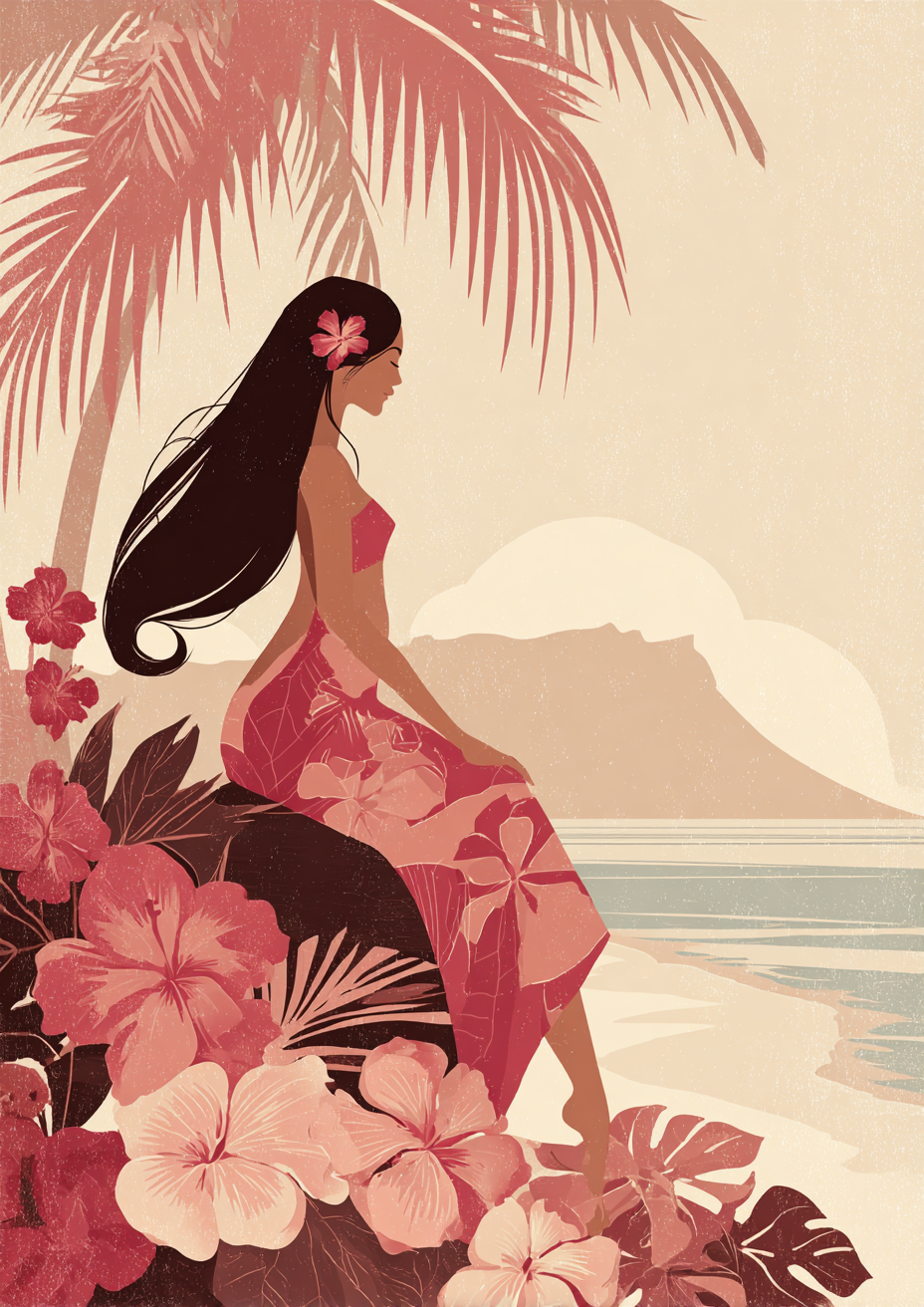
Long before "Hawaii art" became a category found in galleries and gift shops, Native Hawaiians had already developed rich, sophisticated art traditions of their own — practices that were deeply tied to daily life, spirituality, and identity, rather than created for decoration or sale.
Kapa: Cloth Made From Bark
One of the most significant traditional Hawaiian art forms is kapa, a cloth made by harvesting, soaking, and beating the inner bark of the wauke (paper mulberry) plant into thin, durable sheets. Skilled kapa makers would then dye and stamp the finished cloth with intricate geometric patterns, often using carved wooden tools passed down within families. Kapa was used for clothing, bedding, and ceremonial purposes, and the specific patterns used could carry meaning tied to lineage, region, or status.
Feather Work: Art Reserved for Chiefs
Hawaiian feather work is considered one of the most technically demanding art forms in all of Polynesia. Thousands of small feathers, gathered from native forest birds, were painstakingly attached to woven netting to create cloaks (ʻahuʻula), helmets (mahiole), and lei — objects reserved almost exclusively for aliʻi, or chiefs, as symbols of rank and divine authority. A single feather cloak could take years, or even generations, to complete.
Wood Carving & Petroglyphs
Wood carving played a central role in traditional Hawaiian life, used to create everything from ki'i (carved figures representing gods) to canoes, bowls, and weapons. Alongside carving, ancient Hawaiians also left behind petroglyphs — images carved directly into lava rock found across the islands — depicting human figures, canoes, and symbols whose full meaning is still studied by cultural historians today.
An Important Distinction
It's worth noting that these traditional art forms are distinct from the broader category of contemporary "Hawaii art" — including the travel-poster-inspired prints, paintings, and illustrations found in most galleries and shops today. Traditional Native Hawaiian arts carry cultural and often sacred significance specific to Native Hawaiian identity and history, and many practitioners today work hard to preserve and pass on these traditions authentically.
Understanding this history helps give context to just how deep Hawaii's relationship with art really runs — from sacred featherwork worn by chiefs, to the modern prints and paintings that continue to draw inspiration from the islands' natural beauty today.